Active CAN Interface for PCI
1 x CAN (High-Speed)
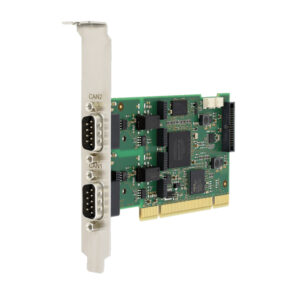
With the CAN-IB400/PCI HMS offers an PCI interface board based on a modern and highly modular concept. The board covers the entire range of field buses, such as CAN (ISO 11898-2).
Features and benefits
Active PCI board with 32 bit microcontroller
Easy expandable via field bus expansion and expansion board
One CAN channel (High-Speed)
Galvanic isolation of the CAN interface
Uniform driver packages support all IXXAT CAN and CAN-FD interfaces and allow easy change of the PC interface type
Powerful programming interface for Windows "VCI" as well as "ECI" for Linux, QNX, RTX, INtime and VxWorks
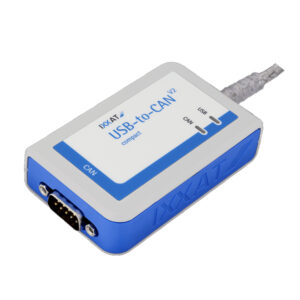
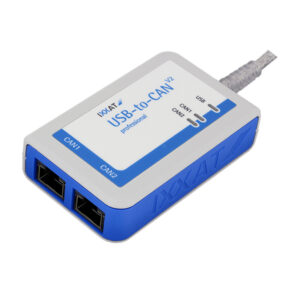
IXXAT USB to CAN V2 professional, 2 x CAN interface High-Speed with Galvanic Isolation (with 2 x RJ45)
USB to CAN V2 professional is the recommended IXXAT CAN Interface by MTU for DiaSys.  DiaSys is a Windows®-based software tool that helps technicians communicates with a wide range of MTU engine controllers. DiaSys allows the user to perform required maintenance and servicing tasks, including reading and recording measurement values/process variables.
CAN-IB200/PCIe
Active CAN Interface for PCI Express
1 x CAN (High-Speed), Galvanic Isolation
With the CAN-IB200/PCIe HMS offers an interface board based on a modern and highly modular concept. The board covers the entire range of field buses, such as CAN (ISO 11898-2), and is available with a standard or a low-profile slot bracket.
Other configurations will be available on consultation based on actual requirements, such as number of CAN interfaces.
CAN-IB100/PCIe, 1 x CAN Interface High-Speed, Galvanic IsolationPassive CAN Interface for PCI Express
With the CAN-IB100/PCIe HMS offers an interface board based on a modern and highly modular concept. Other configurations will be available on consultation based on actual requirements, such as number of CAN interfaces and low speed/high speed CAN.
Flexible configuration options (combination of several CANblue II)
Â
How it works
Bridge mode
The bridge mode allows the user to set-up a CAN-Bluetooth-CAN bridge by using two CANblue II devices. Message exchange occurs on layer 2 and is transparent. The device can also be used in systems with CANopen, DeviceNet or customer-specific protocols. CAN-ID filters can be set for data exchange via Bluetooth. Using more than 2 CANblue devices, multiple busses can be linked with each other.
ASCII/Binary protocol mode
In this mode, functions for transmitting and receiving CAN messages and for configuring the CANblue II are available to the user based on simple ASCII commands and optimized CAN binary messages. The CANblue II is ideal for "non-Windows" systems or embedded platforms.
PC operation mode with VCI driver support
Because it is supported by the VCI CAN driver, the CANblue II can be operated with all IXXAT tools and with customer-specified programs. In addition, wireless access to CAN systems via Bluetooth can also be easily achieved with existing VCI-based application programs and tools.
Configurable CAN-to-CAN Bridge with 2 x High Speed CAN interfaces.
CANbridge NT 200 comes with 2 classic CAN channels .
Enclosure suitable for DIN Rail mounting.
This product may take upto 2 to 3 weeks for delivery.
CAN-Ethernet gateway and CAN-Ethernet-CAN bridge
The CAN@net II/Generic enables easy and flexible access to
CAN systems via Ethernet. The device provides two operation
modes, a bridge mode and a gateway mode.
Features and Benefits
Bridging of large distances and easy system access using Ethernet
1 x CAN (High-Speed)
The CAN@net II allows simple, flexible access from a PC to CAN systems via Ethernet. Due to its ability to support the TCP/IP protocol, the CAN@net II allows the worldwide direct connection to a PC, implementation in an LAN, or, communication with the gateway via the Internet.
Features and benefits
Easy CAN access over large distances
Common driver interface for easy exchange of the PC interface type
CAN-CR210/FO Glass Fiber Version with ST Connector [Extended Temp. Range]
Stackable converter from
ISO 11898-2 to fiber optic cable
The CAN-CR210/FO is used for the conversion of the CAN signal from copper wire (ISO 11898-2) to fiber optic cables. This provides a complete isolation and protection against EM-influences.
For creating star or tree topologies, several CAN-CR210/FO can be connected to a CAN-hub via the integrated backbone bus (also in conjunction with CAN-CR200).
One special feature of the repeater is, that it separates a defective segment from the rest of the network, so that the remaining network can continue working. After elimination of the defect, the segment is switched into the network again.