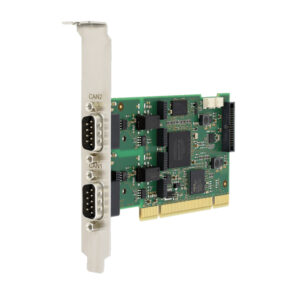
iPC-I 165, 2 x SJA1000 CAN controller, 2 x CAN interface, 2 x galvanic decoupled
This is a powerful and economic solution covering a wide range of CAN applications requiring an active CAN board with one or two CAN channels. Some of the features offered by the on-board microcontroller include filtering, preprocessing, transmission and time stamped storage of the CAN messages. Due to the powerful microcontroller, both CAN controllers can operate simultaneously without losing any data, even in systems with a high bus load. In combination with the CAN driver (VCI, part of delivery), the iPCI 165 allows an easy integration of PC supported CAN applications. In addition, the iPC-I 165 is well-suited for use both with the IXXAT analysis and configuration tools and as a CANopen network controller.
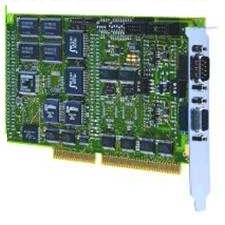
iPC-I 320/104; one CAN channel with galvanic isolation
This active CAN board with one por two CAN channels is appropriate for use in a wide variety of CAN applications. Filtering, pre-processing, transmission and time stamped storage of the CAN messages are just some of the features offered by the on-board micro-controller. In combination with the universal CAN driver (VCI), the iPC-I 320/PCI II allows an easy integration of PC supported CAN applications. Offering an exceptional combination of functionality and value, it is perfectly suited for high-volume productions. In addition, the iPC-I 320/PCI II is also well-suited for use with the IXXAT analysis and configuration tools.
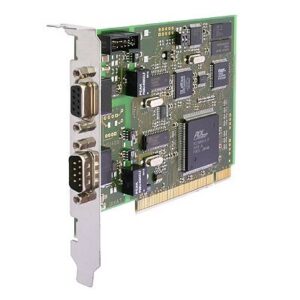
Active CAN Interface for PCI
1 x CAN (High-Speed)
With the CAN-IB400/PCI HMS offers an PCI interface board based on a modern and highly modular concept. The board covers the entire range of field buses, such as CAN (ISO 11898-2).
Features and benefits
Active PCI board with 32 bit microcontroller
Easy expandable via field bus expansion and expansion board
One CAN channel (High-Speed)
Galvanic isolation of the CAN interface
Uniform driver packages support all IXXAT CAN and CAN-FD interfaces and allow easy change of the PC interface type
Powerful programming interface for Windows "VCI" as well as "ECI" for Linux, QNX, RTX, INtime and VxWorks